A Sound-First Rewatch for Hearing a Film Anew
A sound-first rewatch helps you hear a familiar film differently: track music, silence and background noise, then use those details to spark fresh reflection.
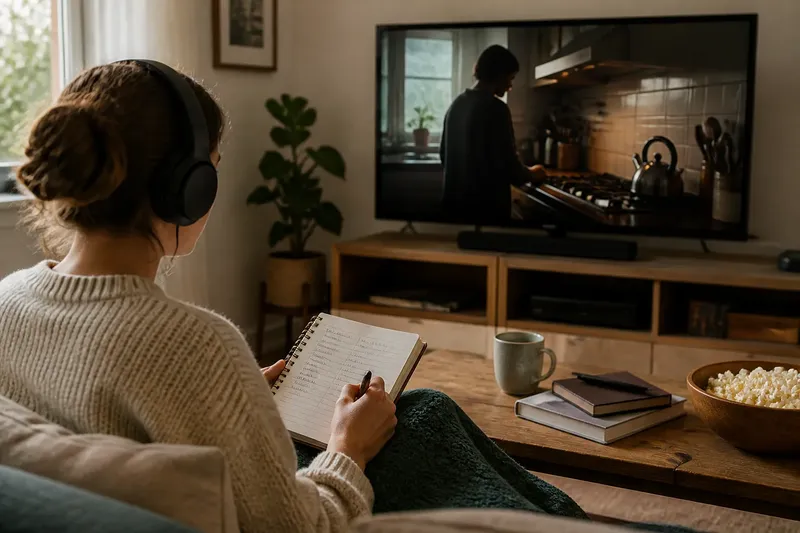
A sound-first rewatch can make a familiar film feel newly alive: listen for the room tone beneath a conversation, the music that arrives before a character does, or the silence after a door closes. Instead of tracing the plot, follow what the soundtrack asks you to notice and how your attention shifts when you listen closely.
This is a simple viewing ritual, not an exercise in identifying every instrument or proving what a filmmaker intended. Choose one sound to follow, keep a few notes, and let what you hear shape a question about the scene.
Choose a listening thread
Pick a film you know well and a sound you can recognise without needing specialist equipment. It might be a recurring musical phrase, footsteps, a train in the distance, a clock, or the contrast between noisy public spaces and quiet rooms. Headphones can make details easier to hear, but ordinary speakers are enough.
Keep the thread specific. “Music” is broad; “the low notes that appear when the main character is alone” gives your attention a workable task. If you are unsure what to follow, choose a sound that you remember from one scene and listen for whether it returns, changes or disappears.
Listen before interpreting
During the rewatch, note the moment the sound begins and ends, what else is audible, and what the image shows at the same time. Separate observation from interpretation: “A steady hum continues after the dialogue stops” describes what you hear; “the room feels watchful” is a response to it. Both can be useful, but the distinction keeps your notes grounded.
Listen for shifts in volume, distance and clarity. A voice may sound close while the speaker appears far away; a familiar melody may become muffled or incomplete. Notice whether the sound belongs to the scene, such as a radio playing in the room, or seems to sit outside it as a score.
Keep a short sound log
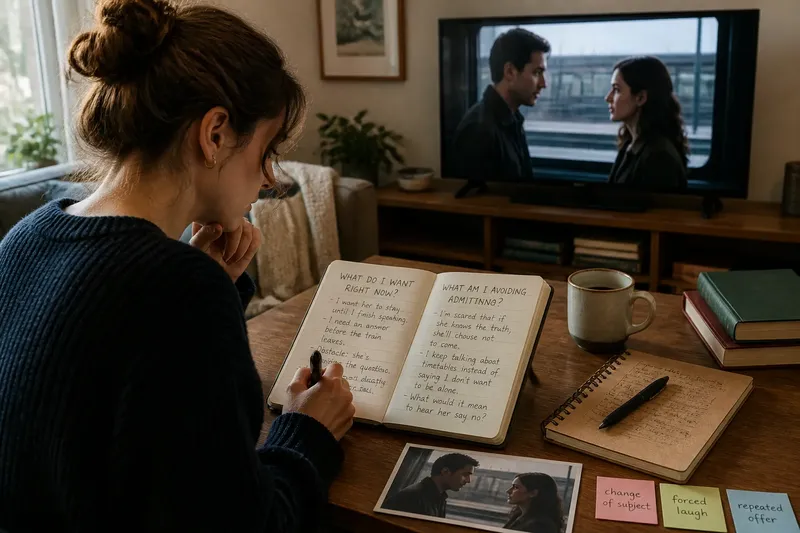
Use a notebook or plain text document and make a brief entry whenever your chosen sound changes. A useful entry records the scene, the audible detail and the question it raises. You do not need to transcribe dialogue or pause after every appearance.
- Sound: What can you hear, stated plainly?
- Setting: Where does it seem to come from?
- Change: Does it grow, fade, stop or return?
- Response: What mood or expectation does the change create?
- Decision: If the sound seems tied to a character’s attention, note that connection; if not, leave its meaning open.
- Next action: If the detail remains noticeable on a later scene, follow it; otherwise, return to watching without tracking it.
Imagine a fictional drama in which a character hears a kettle click off in the first scene, then the same small click is audible in a silent kitchen later. Write down the two settings and the silence around each sound; then compare what the character is doing in both scenes. The result may be a focused question about whether the click signals comfort or unease, rather than a claim that the sound has one fixed meaning.
What should you listen for?
Background sound can make a place feel populated or isolated. A busy café may include overlapping voices and crockery, while a supposedly lively street may sound strangely empty. If a location’s sound changes, note what the film has removed as well as what it adds.
Music can guide emotion, but it can also resist the image. A cheerful tune over a tense exchange may create unease; music that stops during a dramatic moment can leave the scene exposed. Record the contrast first, then ask how it affects your reading.
Silence is rarely the absence of all sound. Listen for breath, fabric, distant traffic or electrical hum. Those details can keep a quiet scene grounded, or make its stillness feel deliberate.
Sound-first rewatch questions?
Do I need headphones?
No. Headphones may make quiet background details easier to notice, while speakers can preserve a more natural sense of a room. Use what lets you hear comfortably without turning the volume up to an uncomfortable level.
Should I pause to write notes?
Pause only when a change is easy to lose from memory, such as a sound that cuts off mid-scene. Otherwise, jot a brief note after the scene so the log does not take over the viewing.
What if I cannot identify a sound?
Describe its quality rather than guessing its source: “a faint, repeated metallic tap” is enough. If it recurs, note where and when; if it does not, let the uncertainty remain.
Can I do this with a film I have not seen?
Yes, but choose a simple thread, such as music stopping or a repeated environmental sound. If following it distracts you from the story, drop the thread and watch normally.
Keep the ritual light
What is not worth the effort is pausing to catalogue every breath, footstep and musical cue. That turns attentive listening into bookkeeping. Follow only sounds that change your sense of a scene, and let incidental details pass.
When the film ends, write one sentence about the sound that most changed your attention. A sound-first rewatch does not need to explain the whole film; it can leave you with a small, usable prompt, such as writing a scene in which a familiar noise returns in a place where it no longer feels safe.